Why Lebanese Mouneh Is Healthier Than Commercial Food
Traditional food health benefits far exceed what modern processed foods offer. Last week, I compared two strawberry preserve jars at the supermarket. One commercial brand listed: strawberries, high-fructose corn syrup, pectin, citric acid, sodium benzoate, red dye, and “natural flavors.” The other, made by a Lebanese grandmother, showed three ingredients: strawberries, sugar, lemon juice.
Both preserve fruit. However, only one provides real nourishment.
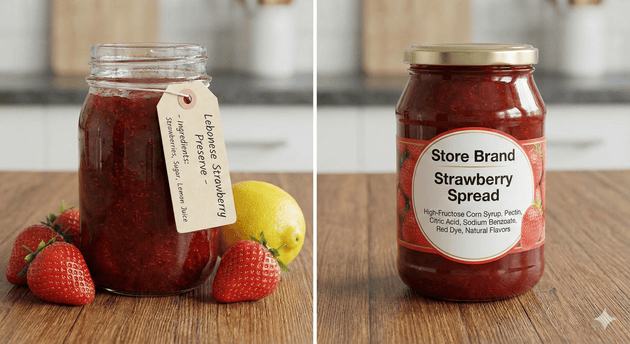
This difference isn’t just about ingredient lists. It’s about completely different food philosophies. Understanding traditional food health benefits requires looking at what’s in traditional preserved foods and what’s deliberately left out.
What Defines Traditional Food Health Benefits?
Before exploring specific advantages, let’s define “healthy.” It’s not just about calories or fat. Rather, it includes:
- Nutrient density: How much nutrition per calorie
- Body absorption: Can our bodies actually use the nutrients
- No harmful additives: What’s NOT in food matters equally
- Easy digestion: Can our bodies process the food easily
- Gut bacteria support: Does it help beneficial gut bacteria
Traditional mouneh excels in all these areas. Science is finally catching up to explain why grandmother was right all along.
Probiotic Power: Key Traditional Food Health Benefits
Perhaps the biggest value come from fermentation. When Lebanese families make torshi (pickled vegetables) or let makdous ferment slightly, they’re not just preserving food—they’re creating medicine.
The Science Behind Traditional Food Health Benefits
Fermented foods contain billions of beneficial bacteria—mainly lactobacillus species that live in our digestive system. In fact, Modern research links these good bacteria to major health improvements:
- Better digestion and nutrient absorption
- Stronger immune system
- Better mental health through gut-brain connection
- Less inflammation throughout the body
- Protection against bad bacteria

A single serving of properly fermented Lebanese pickles contains more beneficial bacteria than an entire probiotic supplement bottle. Moreover, it’s delivered in a form our bodies recognize and absorb better.
Commercial Products Miss Traditional Food Health Benefits
Modern commercial “pickles” typically use vinegar, not fermentation. Instead, they’re sterilized and heated to extend shelf life—killing both harmful and beneficial bacteria. The result tastes like pickles but provides none of the probiotic Benefits.
At LaLynn, we allow our traditional pickled vegetables to ferment naturally. This preserves the beneficial bacteria that make them functional food, not just regular food. These are real Benefits you can taste.
No Chemical Additives: Pure Health Advantages
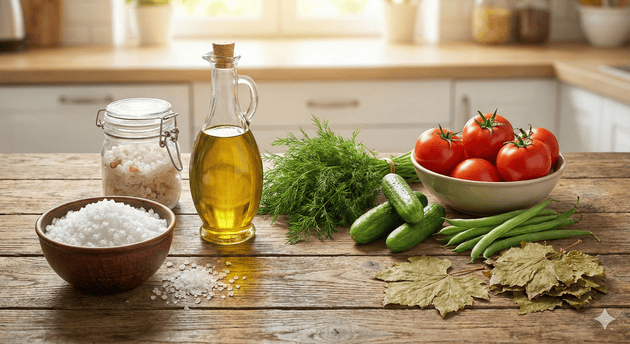
Open any jar of LaLynn mouneh, and you won’t find chemistry experiments. You won’t find sodium benzoate or potassium sorbate. We also avoid artificial colors and mysterious “natural flavors.”
Why Commercial Food Uses Additives
Commercial food production faces challenges traditional mouneh doesn’t:
- Very long shelf life needs (years, not months)
- Transportation across thousands of miles
- Storage in various temperatures
- Need for consistent appearance
- Mass production without quality control
Therefore, manufacturers add chemicals to stop spoilage, maintain color, ensure consistent texture, and extend shelf life forever.
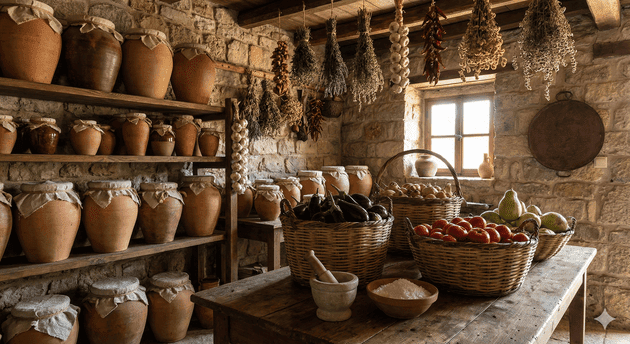
The Health Cost of Additives
Research increasingly links common food additives to health problems. This directly impacts Health by showing what to avoid:
- Sodium benzoate triggers allergic reactions and links to hyperactivity in children
- Artificial colors connect to behavioral issues
- High-fructose corn syrup associates with obesity
- BPA in jar linings acts as hormone disruptor
Traditional mouneh sidesteps all these issues completely. When preservation relies on salt, sugar, oil, and fermentation, you simply don’t need chemical additives. This absence itself creates major health advantages.
Nutrient Retention: Maximizing Traditional Food Health Benefits
Surprisingly, traditional preservation often keeps more nutrients than fresh food that traveled thousands of miles. This is one of the most important advantages.
How Traditional Methods Keep Nutrients
Fermentation actually increases nutrition. The bacteria that ferment foods make B vitamins and help minerals absorb better. For example, fermented cabbage has more vitamin C than raw cabbage. These are measurable nutritional gains.
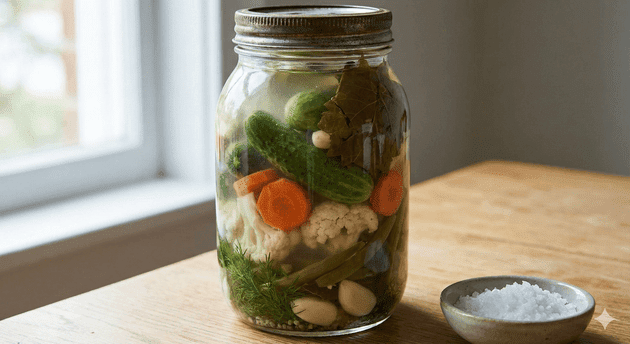
Oil preservation protects vitamins. Makdous, preserved in olive oil, keeps its vitamins A, D, E, and K. Furthermore, the oil not only preserves these vitamins but helps your body absorb them—clear benefits.
Gentle heating preserves delicate nutrients. Traditional jam-making uses lower, slower heat than commercial canning. This gentler process keeps more vitamins and natural plant compounds, providing overall wellness.
Sun-drying concentrates nutrients. When you remove water from tomatoes, you concentrate everything else. Sun-dried tomatoes have 10 times the lycopene (a powerful health compound) of fresh tomatoes. This concentration represents important nutritional value.
Commercial Processing Destroys Nutrients
Industrial canning uses high-heat treatment that destroys heat-sensitive vitamins. Long storage times break down nutrients further. By the time commercial preserved food reaches your table, it may have lost 50-90% of original vitamins. This massive loss eliminates potential benefits.
The Olive Oil Advantage for Health
Lebanese mouneh makes extensive use of olive oil. This creates unique health advantages beyond just preservation.
Extra virgin olive oil is more than fat—it’s medicine. According to olive oil research, it contains:
- Healthy fats: Anti-inflammatory omega-9 fatty acids
- Plant compounds: Powerful cell-protecting elements
- Vitamin E: Protects against cell damage
- Natural antibacterial: Compounds with bacteria and virus-fighting properties
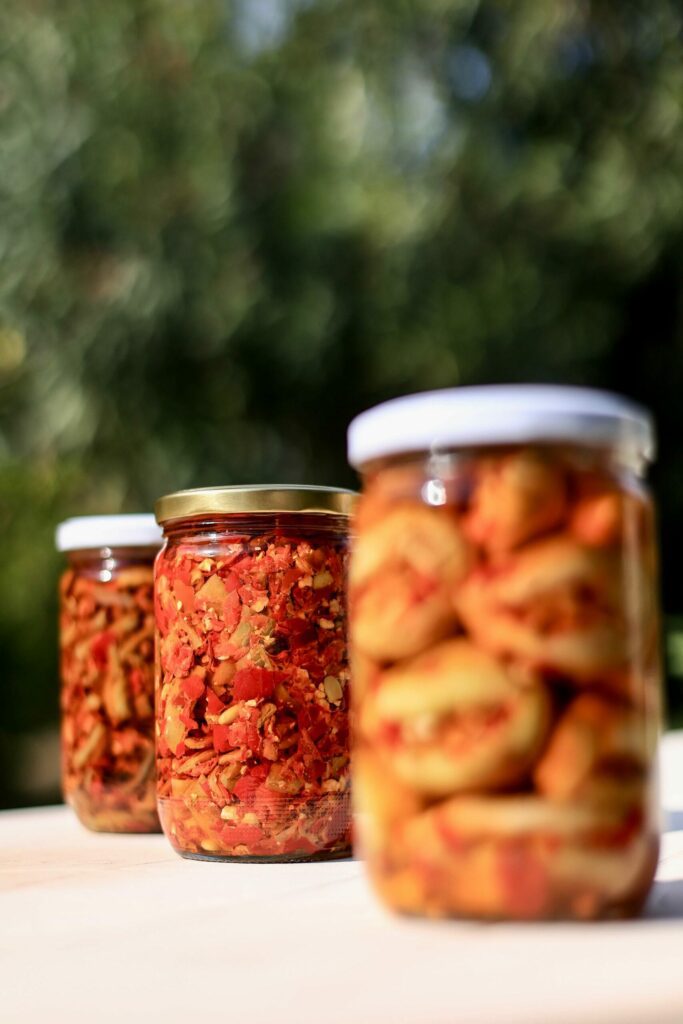
When makdous sits in quality olive oil for months, something fascinating happens. The oil-soluble compounds in the eggplant and stuffing move into the oil. Meanwhile, the oil’s beneficial compounds soak into the vegetables. You’re not just eating preserved eggplant—you’re eating eggplant that’s been soaking in medicinal oil for months. These are powerful benefits.
Research-Backed Oil Benefits
Modern research confirms what Mediterranean cultures knew for thousands of years. Regular olive oil consumption shows clear health improvements:
- Lower heart disease rates
- Reduced cancer risk
- Better brain function with aging
- Lower type 2 diabetes rates
- Reduced body inflammation
At LaLynn, we use only cold-pressed, extra virgin olive oil from Akkar. Not the cheapest option—but the healthiest, providing maximum nutritional value.
Sugar, Sweeteners, and Traditional Food Health Benefits
Yes, traditional mouneh jams contain sugar. But there’s a huge difference between proper cane sugar and sweeteners in commercial preserves. Understanding this reveals important insights.
Traditional Jam Sweetening
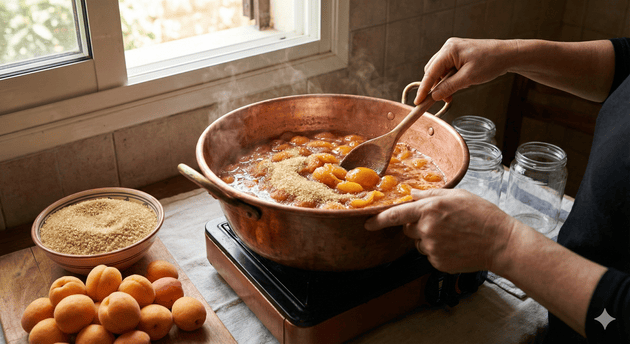
Traditional muraba uses cane sugar at amounts necessary for preservation (typically 60-65%). Importantly, this isn’t random—it’s the minimum amount needed to stop spoilage without cooling. The sugar serves a functional purpose, not just sweetening.
Additionally, long cooking partly breaks down sugar into simpler forms that your body processes more easily. This creates better results than you might expect.
Commercial Sweetener Problems
Commercial jams often use high-fructose corn syrup instead of sugar. This cheaper sweetener processes differently in the body, reducing natural value:
- Goes directly to liver, often converting to fat
- Doesn’t trigger fullness hormones like regular sugar
- Links to obesity and metabolism problems
- May contribute to fatty liver disease
Some “diet” preserves use artificial sweeteners like aspartame or sucralose. These chemicals may have zero calories, but they’re not zero impact. They alter gut bacteria and may actually increase sugar cravings, eliminating these benefits.
Traditional cane sugar in proper amounts, especially combined with fruit’s natural fiber and nutrients, is vastly healthier than modern sweetener alternatives.
Minimal Processing Maximizes Traditional Food Health Benefits
Modern nutrition science increasingly recognizes that how food is processed matters as much as ingredients. This understanding highlights crucial advantages.
Ultra-Processed Foods Harm Health
Ultra-processed foods undergo extensive industrial processing. For Instance, they typically contain ingredients you’d never use in home cooking—thickeners, texturizers, bulking agents. According to processing research, these foods link to:
- Higher obesity rates
- Increased cancer risk
- Heart disease
- Earlier death from all causes
Traditional Mouneh Stays Minimally Processed
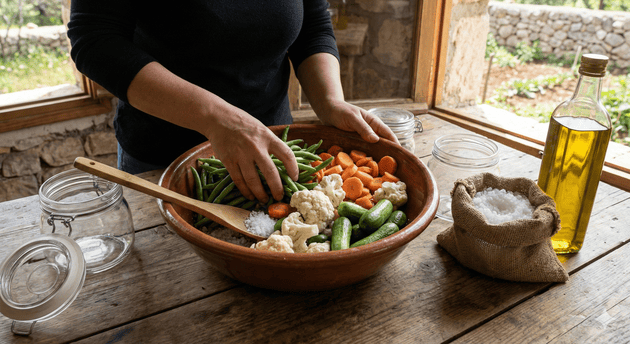
Traditional mouneh is minimally processed, preserving traditional food health benefits. It involves:
- Washing and cutting vegetables
- Mixing with salt, sugar, or oil
- Fermentation or cooking
- Storing in jars
These are processes you could do in any home kitchen—because that’s exactly where mouneh has been made for thousands of years. There’s no industrial processing, no chemical transformation, no ingredients requiring a factory. This minimal processing preserves maximum nutritional value.
Salt Use: Traditional Wisdom Versus Industrial Excess
Critics sometimes point to salt content in traditional mouneh as unhealthy. However, context matters enormously for understanding real health implications.
Traditional Salt Use
Traditional mouneh uses salt for preservation, not just flavoring. The amounts are carefully measured—enough to preserve safely, but not more than necessary. Additionally, the salt used is typically sea salt or rock salt containing trace minerals, adding to traditional food health benefits.
Moreover, traditional Lebanese diets include lots of fresh vegetables, fruits, and herbs. These balance sodium intake with potassium and other minerals, maintaining overall balance.
Commercial Salt Overload
Commercial processed foods often contain far more sodium than traditional mouneh. They don’t use it for preservation (they use chemical preservatives instead). Rather, they use it purely for flavor and to mask poor-quality ingredients.
Furthermore, commercial foods use refined salt with anti-caking agents and no beneficial trace minerals, eliminating potential traditional food health benefits.
Micronutrient Advantage of Traditional Food
Because traditional mouneh starts with quality ingredients—really ripe fruit, freshly harvested vegetables, quality spices—it contains micronutrients that never make it into commercial products. These provide significant health value.
Plant Compounds Support Health
Plant nutrients are compounds in plants that benefit human health. They’re not essential vitamins or minerals, but they’re important for best health. Examples providing benefits include:
- Lycopene in tomatoes (powerful cell protector)
- Color compounds in berries (anti-inflammatory)
- Quercetin in onions (immune support)
- Allicin in garlic (bacteria-fighting)
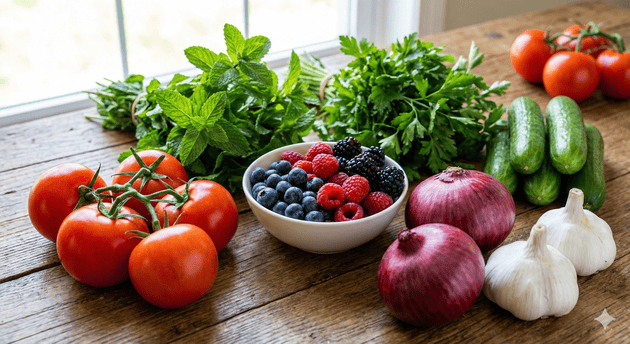
These compounds are most abundant in fully ripe, freshly harvested produce. Commercial food production typically uses under-ripe produce (so it survives shipping) and long storage times (which break down plant nutrients).
Traditional mouneh, made from peak-harvest ingredients, captures these compounds at maximum concentration, providing superior nutritional quality.
Digestibility and Absorption: Hidden Traditional Food Health Benefits
It’s not just what nutrients food contains—it’s whether your body can actually use them. This represents crucial but often overlooked aspect of nutrition.
Fermentation improves digestibility, providing better traditional food health benefits. It partly breaks down complex compounds. Fermented eggplant is easier to digest than fresh eggplant. Fermented cabbage is more nutritious and digestible than raw cabbage.
Traditional cooking methods make nutrients more available to your body. The slow cooking of jams breaks down plant cell walls, making nutrients more accessible. The combination of ingredients in traditional recipes often helps nutrient absorption—like how fat in olive oil helps absorb vitamins in preserved vegetables.
These absorption improvements create real advantages that laboratory analysis might miss.
Gut Bacteria: Foundation of Traditional Food Health Benefits
Emerging research reveals that the trillions of bacteria in our digestive system deeply influence our health. They affect everything from immune function to mental health to weight control. This makes gut health central to understanding our food.
Traditional Fermented Foods Support Gut Health
Traditional fermented mouneh supports healthy gut bacteria, creating major wellness advantages by:
- Adding beneficial bacterial strains
- Providing fiber that feeds good bacteria
- Making compounds that help beneficial bacteria grow
- Creating an intestinal environment hostile to bad bacteria

Commercial Foods Often Harm Gut Bacteria
Commercial preserved foods often harm gut bacteria, eliminating potential benefits through:
- Preservatives that kill both good and bad bacteria
- Lack of fiber (often removed during processing)
- Additives that change gut bacterial populations
- High levels of refined sugars feeding harmful bacteria
Your gut bacteria may be the single most important factor in overall health that nutrition science currently understands. Traditional mouneh supports it while commercial foods often harm it, creating clear differences in quality.
The Inflammation Factor in Traditional Food Health Benefits
Chronic low-grade inflammation underlies most modern diseases—heart disease, cancer, diabetes, Alzheimer’s, arthritis, and more. Reducing inflammation represents one of the most important goals.
Traditional Mouneh Reduces Inflammation
Traditional mouneh is anti-inflammatory, providing crucial advantages because it:
- Contains olive oil rich in anti-inflammatory compounds
- Includes fermented foods that reduce body inflammation
- Uses herbs and spices with anti-inflammatory properties
- Avoids inflammatory additives and harmful fats
- Provides cell-protecting compounds that counter inflammatory processes
Commercial Foods Increase Inflammation
Commercial processed foods are pro-inflammatory, eliminating health benefits due to:
- Refined oils high in inflammatory fatty acids
- Chemical additives triggering immune responses
- High levels of refined sugars
- Trans fats (though less common now)
- Lack of cell-protecting compounds due to processing
If you’re trying to reduce inflammation—whether to prevent disease or manage existing conditions—replacing commercial preserves with traditional mouneh is a simple, delicious way to gain real health benefits.
Quality Ingredients Create Superior Traditional Food Health Benefits
Perhaps the fundamental difference in value between traditional and commercial preserved foods comes down to ingredient quality.
Traditional mouneh uses:
- Fully ripe, fresh produce at peak flavor and nutrition
- Quality olive oil, sea salt, and spices
- No fillers, no cheap substitutes, no shortcuts
Commercial products typically use:
- Produce harvested under-ripe for shipping durability
- Lowest-cost oils and cheapest salt
- Fillers to reduce expensive ingredient costs
- Damaged or lower-grade produce (hidden by processing)
ultimately, you can taste the difference—but more importantly, your body experiences the difference through real nourishment.
The LaLynn Difference in Quality
At LaLynn, we make mouneh exactly as Lebanese grandmothers have made it for generations, preserving maximum nutrition:
- Fresh, peak-season ingredients from Akkar
- Traditional preservation methods—fermentation, oil, salt, sugar
- No chemical preservatives, artificial colors, or additives
- Small-batch production ensuring quality control
- Patience—allowing proper fermentation and curing times
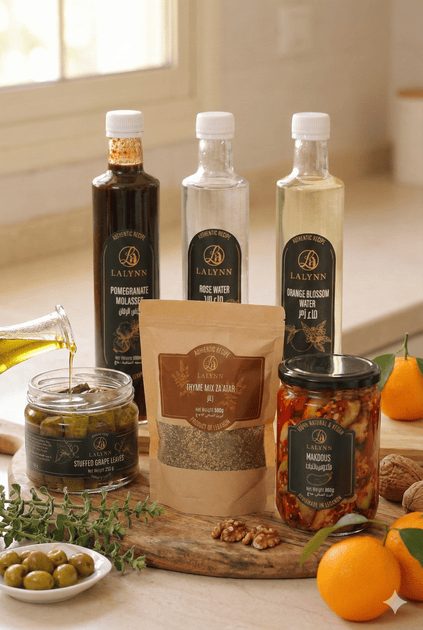
We could cut costs with inferior ingredients. Production could be sped up with chemical shortcuts. We could even extend shelf life with artificial preservatives.
But we don’t—because we believe food should nourish, not just fill stomachs. Because we honor the wisdom of generations of Lebanese women who knew that how you prepare food creates the traditional food health benefits that matter most.
The Bottom Line on Traditional Food Health Benefits
These benefits aren’t just nostalgic or cultural—they’re scientifically superior to modern commercial alternatives. Traditional mouneh provides:
- Beneficial probiotics commercial versions lack
- Higher nutrient density and better body absorption
- No chemical additives or artificial ingredients
- Minimal processing that preserves nutritional value
- Ingredients supporting rather than harming gut bacteria
- Anti-inflammatory compounds promoting health
Modern food science increasingly validates what our grandmothers knew naturally: real food, prepared traditionally, provides the best traditional food health benefits.
When you choose LaLynn mouneh, you’re choosing more than preserved food. You’re choosing functional nutrition. You’re choosing food that supports health, not just sustains life.
Because the best health foods aren’t found in pharmacies—they’re found in jars of traditional mouneh, made the way families have made them for thousands of years, preserving all the traditional food health benefits nature intended.
Explore our complete range of traditional Lebanese preserved foods and experience the health difference for yourself.